

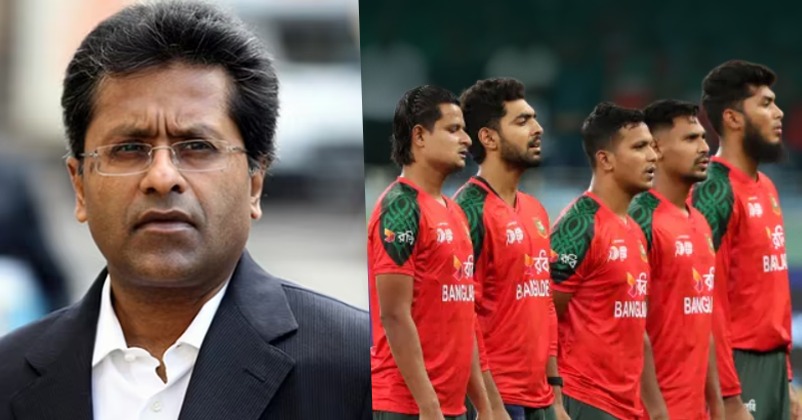
As the ICC Men’s T20 World Cup draws closer, a fresh controversy has erupted around Bangladesh’s refusal to travel to India for their scheduled matches. The issue has sparked strong reactions across the cricketing world, with former Indian Premier League commissioner Lalit Modi stepping in to publicly defend India’s ability to host international teams safely.
Lalit Modi urged Bangladesh to reconsider their decision, stressing that India has consistently proven to be a secure destination for global sporting events. He pointed out that visiting teams have never faced serious security issues in the country and said that authorities have always ensured tight protection at matches. According to him, the situation should not be turned into a political debate and teams should respect the tournament schedule if they intend to participate.
The controversy began when the Bangladesh Cricket Board requested that their World Cup matches be moved out of India. They cited security concerns that reportedly intensified after the BCCI asked Kolkata Knight Riders to release Bangladesh fast bowler Mustafizur Rahman from their IPL squad. Following this, the BCB formally asked the ICC to relocate their matches to another venue.



While the ICC rejected Bangladesh’s request, the BCB has stood firm. On Thursday, the board accused the ICC of applying double standards, pointing to a previous instance where the governing body accepted the BCCI’s refusal to send India’s men’s team to Pakistan for the 2025 Champions Trophy. Bangladesh officials argued that similar consideration should have been shown to them.
Bangladesh Youth and Sports Adviser Asif Nazrul voiced disappointment with the ICC’s handling of the matter. He stated that Bangladesh felt they were treated unfairly and said the decision of not playing in India remains unchanged. Asif Nazrul also criticised the ICC for issuing what he described as a short ultimatum and for presenting Sri Lanka as a co-host option without proper discussion. He confirmed that Bangladesh plans to formally approach the ICC again with a proposal to play their matches in Sri Lanka.

Despite these objections, the ICC reiterated on Wednesday that the tournament would go ahead as planned, with Bangladesh’s matches remaining in India. The ICC explained that making changes so close to the event would be impractical and could set a risky precedent unless there was a credible and immediate security threat.
Asif Nazrul maintained that Bangladesh’s concerns stem from a real incident and should not be dismissed as mere speculation. As things stand, the standoff continues, adding an unexpected layer of tension ahead of one of cricket’s biggest global events.