

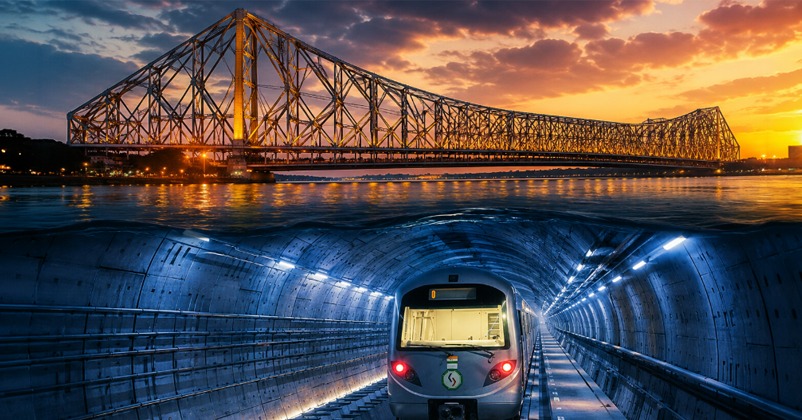
Most metro stations help commuters travel through crowded cities. But one station in Kolkata offers a journey that feels far more unusual, taking passengers deep underground and beneath a major river before emerging on the other side.
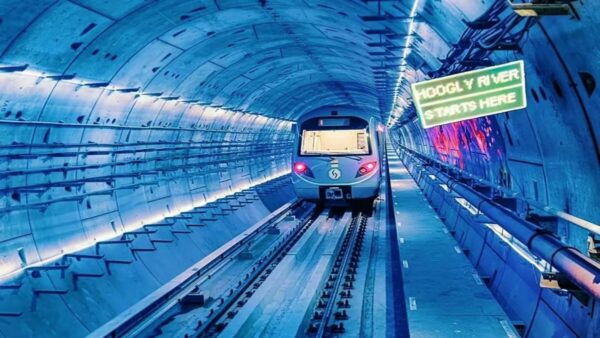
Howrah Metro Station, located on Kolkata’s East-West Metro Corridor, currently holds the distinction of being India’s deepest metro station. Built around 33 metres below ground level, the station lies deeper than the height of many 10-storey buildings. However, its depth is only part of what makes it remarkable.
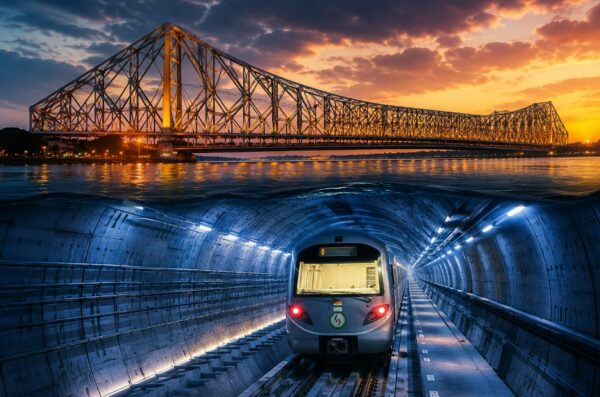
The station forms a key section of India’s first underwater metro tunnel, which runs beneath the Hooghly River and connects Kolkata with Howrah. According to the Kolkata Metro Rail Corporation (KMRC), trains travelling through the underwater stretch pass beneath the riverbed in approximately 45 seconds.
For Kolkata, a city already known for operating the country’s first metro railway system, the project marked another major milestone in urban transportation and engineering.
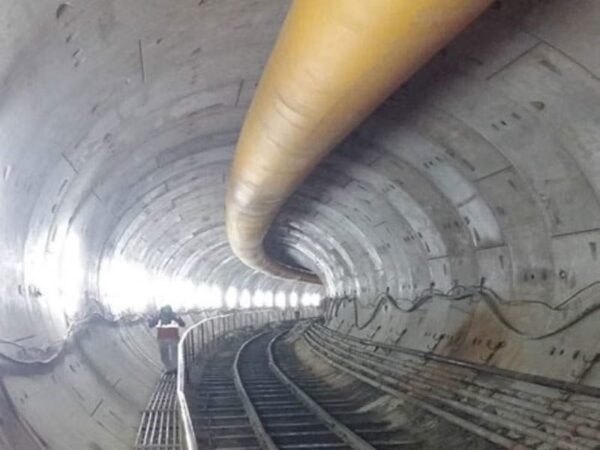
Building the station and tunnel was an enormous challenge. Howrah is among India’s busiest railway hubs, surrounded by dense urban development, old buildings underground utility networks and constant passenger activity. Engineers had to construct the metro system deep below these structures while also tunnelling beneath the Hooghly River.
The work required advanced technology and careful planning. According to KMRC, specialised tunnel boring machines were used to excavate through the difficult alluvial soil found beneath the river. Engineers also continuously monitored water pressure and ground conditions to ensure safety and stability throughout the construction process.
The unusual depth of the station was largely dictated by geography. To safely travel beneath the riverbed and existing infrastructure, the metro alignment had to descend significantly below the surface before gradually rising again after crossing the river. As a result, the station complex was built much deeper than most metro stations in India.
This depth is immediately noticeable to passengers. Long escalators carry commuters through multiple underground levels before they finally reach the platforms. Many visitors describe the experience as similar to descending into a structure buried almost as deep as a 10-storey building.
The underwater tunnel quickly became a major attraction. Videos showing trains travelling beneath the Hooghly River gained widespread attention online after trial runs and public services began. Many commuters described the experience as unique and surreal, especially because the train moves below one of eastern India’s most historically significant rivers.
Beyond its engineering appeal, the project serves an important transportation purpose. The East-West Metro Corridor is designed to ease travel between Kolkata and Howrah, two densely populated urban centres traditionally connected by the Howrah Bridge, ferry services and heavily congested roads. Once fully operational, the corridor is expected to improve daily travel for lakhs of passengers.
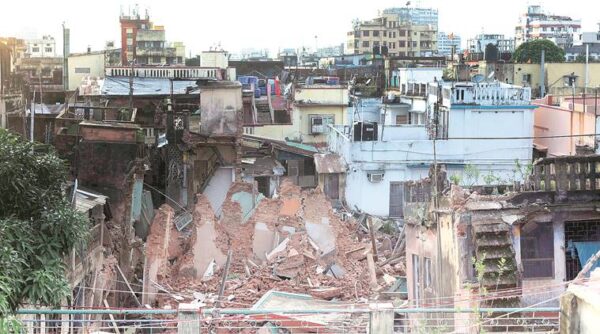
The project’s journey, however, was far from smooth. Construction faced years of delays due to land acquisition issues, technical difficulties and accidents. One of the most significant incidents occurred in 2019 near Bowbazar, where tunnelling activity caused structural damage to buildings and forced evacuations, drawing nationwide attention to the risks associated with large underground infrastructure projects.
Despite these setbacks, the final achievement remains one of India’s most impressive engineering accomplishments. Deep beneath Kolkata and below the waters of the Hooghly River, trains now travel through tunnels carved under one of the country’s oldest and busiest urban landscapes, creating a new chapter in India’s metro history.