

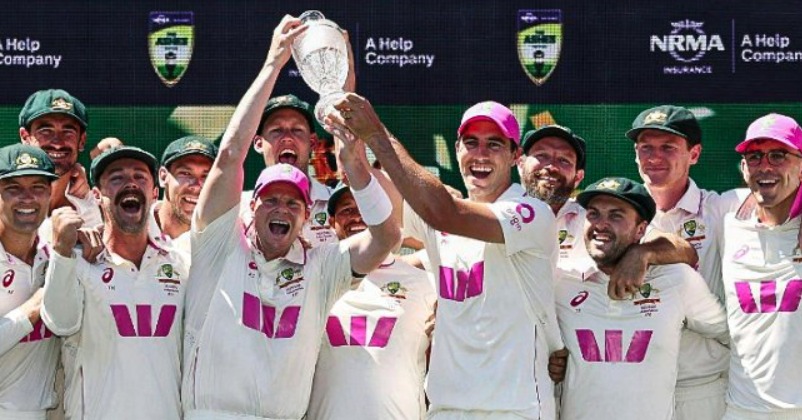
The final chapter of a long, exhausting Ashes summer unfolded under bright Sydney skies, where Australia once again proved why they remain so hard to beat at home. With nerves jangling and history on the line, the hosts chased down a modest target to win the fifth Test by five wickets, sealing a commanding 4-1 series victory over England and ending the contest on an emotional high for retiring opener Usman Khawaja.
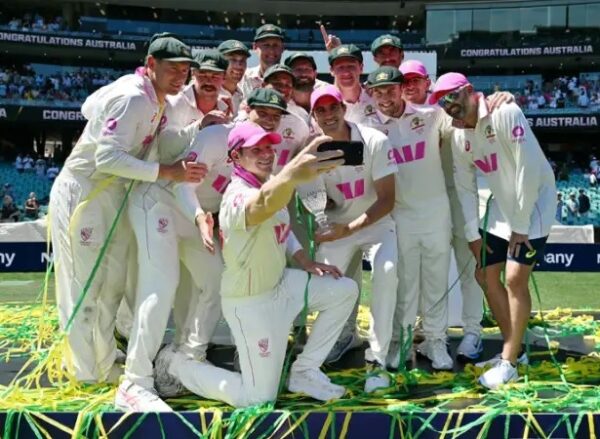
Australia began the final day knowing the finish line was close but England refused to fade quietly. The target of 160 looked straightforward on paper, yet the chase turned edgy as wickets kept falling. By the time the winning runs were scored shortly after lunch on day five, Australia had lost five batters, ensuring the finish was anything but dull. Cameron Green remained unbeaten on 22, while Alex Carey stood firm on 16 to guide the team home.
The top order provided a brisk start before momentum stalled. Travis Head struck 29 with his usual attacking flair, while Jake Weatherald added a lively 34. Captain Steve Smith, however, could only manage 12 and Usman Khawaja’s final innings ended with just six runs, closing the curtain on a proud 88-Test career. Despite the low score, the farewell moment was special, with England forming a guard of honour as he walked out one last time.
Marnus Labuschagne briefly steadied the innings, surviving an early chance when dropped on 20 and going on to make 37. His run-out, a result of poor judgment rather than pressure, briefly reignited English hopes as Australia slipped to 121 for five. Still, the outcome never truly felt in doubt.

Earlier, England had been bowled out for 342, largely thanks to a magnificent knock from Jacob Bethell. The young batter, widely seen as a key part of England’s future, played with composure and class to score 154. His long stay at the crease, spanning 265 balls and featuring 15 boundaries, stood out in an otherwise difficult tour for the visitors.
That tour had begun disastrously, with England losing heavily in Perth and Brisbane before suffering another defeat in Adelaide. Confidence was high when they arrived, fueled by talk of Australia fielding their weakest side in over a decade and they believed that their aggressive approach could finally bring Ashes success Down Under for the first time since 2011. Instead, criticism followed quickly, targeting their preparation, discipline and bold playing style.
England briefly silenced those doubts with a stirring comeback win in Melbourne, chasing down a tricky target to claim their first Test victory in Australia in 18 attempts. The result restored some pride but the narrow loss in Sydney means serious questions await back home, including scrutiny over the future of head coach Brendon McCullum.
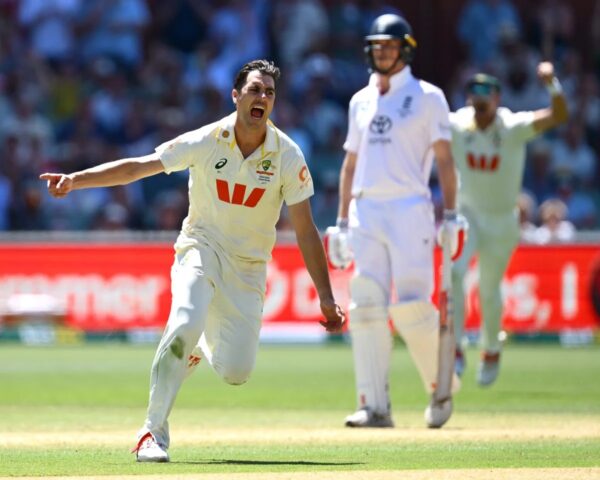
Australia’s dominance was all the more impressive given their injury concerns. They played the series without Josh Hazlewood and had captain Pat Cummins for only one Test, while veteran spinner Nathan Lyon was limited in his impact. Still, they found ways to win, backed by strong performances across the squad.
The series also drew massive interest, with nearly 860,000 fans attending across venues and a record crowd packing into the Sydney Test. On the field, tensions flared during the chase, particularly after a controversial review involving Snicko technology, which had drawn criticism throughout the series. Tempers cooled eventually but the intensity never dropped.


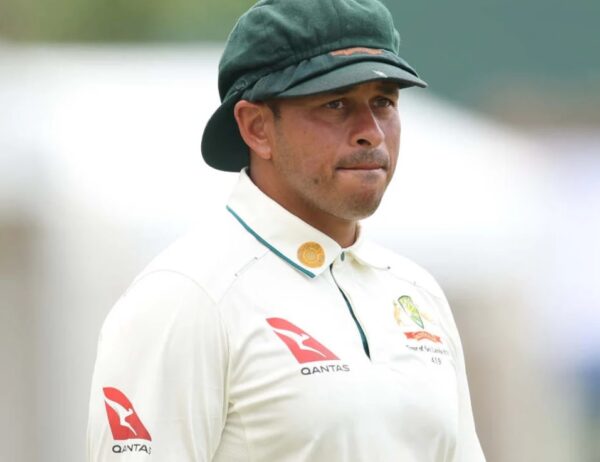
Mitchell Starc was one of Australia’s standout performers, finishing as the leading wicket-taker with 31 scalps. His efforts helped dismiss England cheaply in the second innings and capped a series where Australia were consistently sharper when it mattered most.
When the final run was scored, it marked more than just a Test win. It confirmed Australia’s continued dominance at home, closed a bruising Ashes battle and delivered a fitting farewell to one of their most respected players.