

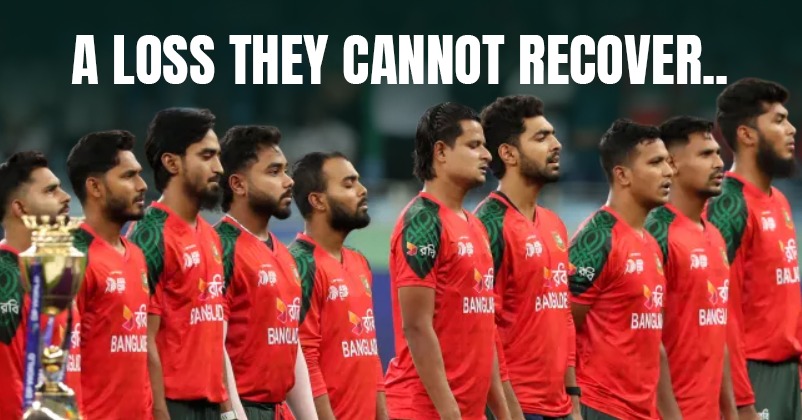
As uncertainty continues to surround Bangladesh’s participation in the T20 World Cup 2026 in India, the financial consequences of a potential boycott are beginning to look serious. According to a report, the Bangladesh Cricket Board could suffer losses amounting to nearly Rs 240 crore if the team ultimately decides not to travel to India for their Group C matches.
The figure includes around BDT 325 crore, which is roughly 27 million US dollars, representing Bangladesh’s share of the International Cricket Council’s annual revenue. This alone would be a significant setback for the board but the damage would not stop there. Sources indicate that broadcast deals, sponsorship income and overall earnings for the financial year could also take a severe hit, possibly reducing revenue by as much as 60 percent or even more.
There are also concerns that the fallout could extend beyond the World Cup. India’s scheduled tour of Bangladesh in August and September may be cancelled if relations worsen. That series is considered extremely valuable, with television rights comparable to at least ten bilateral matches against other international teams. Losing that tour would further deepen the financial strain on the BCB.



A senior source close to developments within Bangladesh cricket over the past few weeks suggested that the situation hardened after government sports adviser and legal expert Asif Nazrul took a firm stand. Once he made his position clear, there was little room left for compromise. During a recent meeting, Asif Nazrul reportedly led most of the discussion, while Bangladesh Cricket Board president Faruque Ahmed, popularly known as Bulbul Bhai, played a more limited role. The players largely stayed silent during the talks.
There is also a sense of unease among senior cricketers. Some feel that if a respected figure like Tamim Iqbal could be treated poorly in the current environment, they themselves could face even harsher consequences for speaking up. Observers noted that Bulbul appeared visibly disappointed after the meeting, having failed to change Asif Nazrul’s stance.

Publicly, Bulbul maintained that the board would continue trying to ensure Bangladesh’s participation in the World Cup, even amid talk of ultimatums. However, his comments did little to reassure those watching, as his tone suggested uncertainty rather than confidence.
It has also emerged that Asif Nazrul and Bulbul have promised players that their match fees would be protected, calculated based on the number of games Bangladesh would have played. Still, for elite international cricketers, financial security is only part of the picture. Beyond money, the desire to compete on the world stage remains a powerful motivation and missing a global tournament could leave a lasting impact that goes far beyond balance sheets.