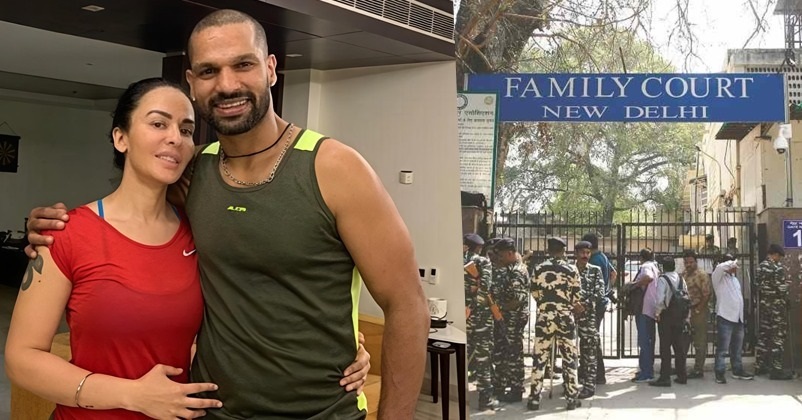
Former Indian cricketer Shikhar Dhawan has received significant relief in a long-running legal battle with his former wife. A family court in Delhi has ordered Aesha Mukerji to return ₹5.7 crore (about AU$894,397) that she had received earlier as part of a property settlement in Australia. The court ruled that the agreement was obtained through threats, coercion and fraudulent circumstances.
The order came from the Patiala House Family Court, which examined the dispute between the former couple over property and financial assets. In a major observation, the court stated that the earlier property settlement passed by an Australian court was not valid because the couple’s marriage had been registered in India. Therefore, the foreign court did not have the authority to decide on the matter.
The judgment was delivered by Devender Kumar Garg who declared the property settlement documents invalid. The court concluded that the cricketer had signed those papers under pressure and unfair circumstances. Along with directing the return of ₹5.7 crore, the court also ordered Aesha Mukerji to pay 9 percent annual interest on the amount starting from the date the lawsuit was filed.
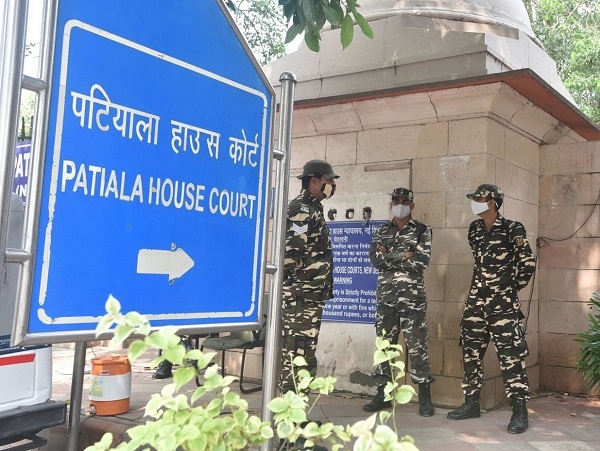
The Delhi court further restrained Aesha Mukerji from enforcing the orders passed by a court in Australia in February 2024. Those orders had earlier divided the couple’s global assets, including properties and financial holdings linked to the cricketer in India.
According to details presented before the court, the Australian court had awarded Aesha Mukerji 15 percent of the couple’s total asset pool. Under that arrangement, she retained assets worth ₹7.46 crore (around AU$1.17 million). In addition, she was also granted ₹15.95 crore (about AU$2.5 million) from Shikhar Dhawan along with the transfer of a property. Between 2021 and 2024, several orders had been passed by the Australian court regarding the division of their assets.
Shikhar Dhawan later challenged those rulings in the Delhi court. He argued that the decisions were not in line with Indian matrimonial law. He also said that he had already informed the Australian court through an affidavit that he did not accept its jurisdiction. According to him, any interim arrangement there was agreed to only because of pressure and fear.
In his submissions, the cricketer made serious allegations about the circumstances after their marriage in 2012. He claimed that Aesha Mukerji threatened to circulate fabricated and defamatory material that could damage both his reputation and cricket career if he did not meet certain financial demands. He also alleged that several properties purchased using his money were registered either jointly or mainly in her name because he was under pressure.

The court was told that in one case, a property bought by him listed Aesha Mukerji as the 99 percent owner. He further claimed that he was forced to purchase another property in Australia in her name. That property was eventually sold in 2019 and the proceeds were retained by her as part of an interim arrangement during the Australian legal proceedings.
After reviewing the evidence, the judge observed that Shikhar Dhawan’s involvement in the Australian court proceedings could not be treated as voluntary acceptance of its authority. The court noted that his participation appeared to have taken place under fear and coercion. It also pointed out that those proceedings were not based on the matrimonial laws under which the couple had married in India.
The ruling was delivered ex parte because Aesha Mukerji did not appear before the Delhi court despite being summoned multiple times. The court recorded that she neither contested nor challenged the claims made by Shikhar Dhawan during the proceedings.

The court also discussed the question of applying foreign law in the case. It concluded that the provisions of Australia’s family law could not override Indian legal statutes since the marriage had been solemnised and registered in India. The judgment further stated that the Australian legal framework conflicted with Indian public policy and relevant matrimonial laws.
The couple’s marriage had already ended earlier. In 2023, a Delhi court granted them a divorce. During those proceedings, the court observed that Shikhar Dhawan had suffered mental distress after being separated from their son Zoravar Dhawan for several years. While he was not given permanent custody, he was granted visitation rights and permission to communicate through video calls in both India and Australia where Aesha Mukerji lives. Later, Shikhar Dhawan said he was eventually blocked from contacting his son.



Shikhar Dhawan and Aesha Mukerji had married in Delhi in 2012. She was living in Australia at that time and had two children from a previous marriage. Even after their wedding, she continued to stay there while the cricketer frequently travelled between the two countries. Their son was born in 2013 but differences between them reportedly began soon after, leading to years of legal disputes in both the nations.
After the difficult chapter in his personal life, the former India opener moved forward. He married Sophie Shine in a private ceremony held on February 22 this year. The latest court decision now marks another major turning point in the long and complicated legal battle between him and his former spouse.
 Director Of One Of Bollywood’s Most Violent Films Is Now Set For Hollywood Debut With Oscar Winner
 Mithun Chakraborty Reveals How Zeenat Aman Changed His Career When Other Actresses….
 Niti Taylor Makes Casting Couch Allegations Against Telugu Movie Director
 Here Is Why Madhuri Dixit’s Husband Could Not Recognise Shah Rukh & Salman At Reception