

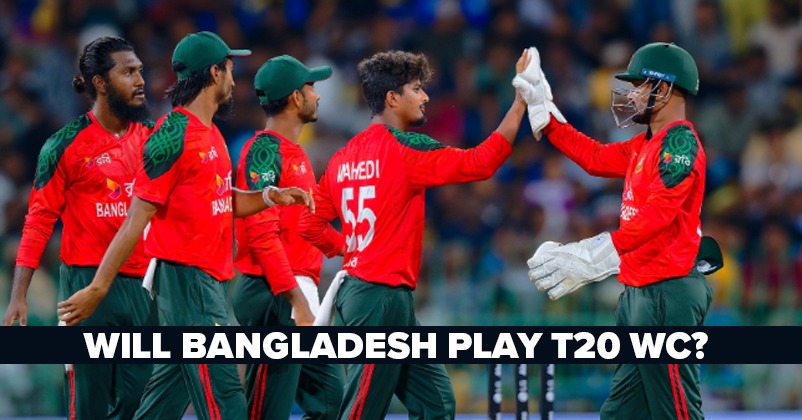
What began as a behind-the-scenes disagreement has now grown into a full-blown crisis with major World Cup implications. The International Cricket Council (ICC) has reportedly drawn a firm line with the Bangladesh Cricket Board (BCB) over its continued refusal to travel to India for the 2026 men’s T20 World Cup.

As per reports, the ICC has given Bangladesh a clear deadline of January 21 to confirm its participation in India. If the board does not agree by then, Bangladesh could be replaced by Scotland, who would qualify based on current T20I rankings. This message is said to have been delivered during a meeting between ICC and BCB officials held in Dhaka over the weekend.
Bangladesh’s stance has remained unchanged. The board has once again asked for its matches to be moved out of India, ideally to co-host Sri Lanka, citing security concerns. According to the report, an independent security advisory shared with all participating teams classified the threat level in India as medium to high. However, the ICC has maintained that there is no specific or targeted risk to the Bangladeshi team or to any side scheduled to play matches in India.



The global body has also reportedly turned down Bangladesh’s proposal to swap groups with Ireland, a move that would have allowed Bangladesh to play all its group matches in Sri Lanka instead.
This deadlock has now stretched into its third week. Under the current schedule, Bangladesh are set to play three group-stage matches in Kolkata and one in Mumbai, beginning on the tournament’s opening day on February 7.
The roots of the concern appear to trace back to a recent IPL-related development. The BCCI reportedly instructed Kolkata Knight Riders to release Bangladeshi pacer Mustafizur Rahman from their 2026 squad, despite signing him for a significant sum at last year’s auction. While no official reason was publicly stated, indications were made toward growing anti-Bangladeshi sentiment in India.

The situation has also exposed fractures within the Bangladesh board itself. Several former players have urged the BCB to seek a diplomatic middle ground rather than taking a rigid stance. Matters worsened when a senior official suggested, in a dismissive manner, that skipping the World Cup would not cause financial loss and that players would not be compensated. That remark sparked a brief player strike before a tense resolution was reached.
With time running out, Bangladesh now faces a defining moment — one that could reshape its World Cup future.