

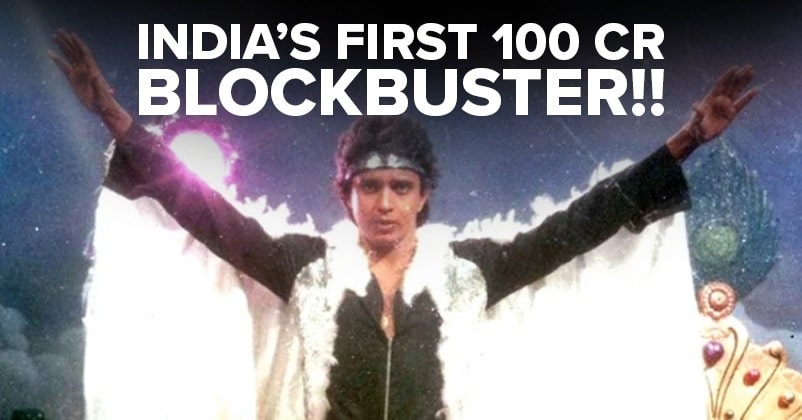
In the early 1980s, when Bollywood had no concept of massive box office clubs or worldwide collections, a colorful, music-driven film quietly created history. Long before filmmakers chased global numbers, Disco Dancer showed that Indian cinema could travel far beyond its borders and still connect deeply with audiences. Released in 1982, the film went on to become the first Indian movie to earn more than ₹100 crore worldwide, a figure that felt almost unimaginable at the time.
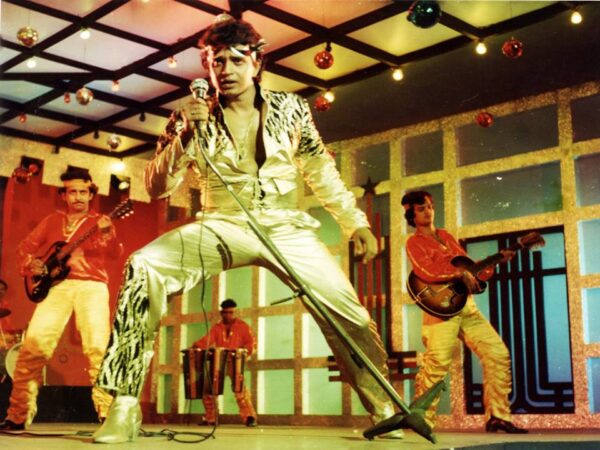
Disco Dancer hit theatres on December 10, 1982 and was made on a surprisingly modest budget of around ₹2 crore. What followed was nothing short of extraordinary. The film didn’t just succeed in India but found overwhelming love overseas, especially in the Soviet Union. There, it became more than entertainment; it turned into a cultural phenomenon. Audiences embraced its catchy music, energetic dance sequences and emotional story, proving that Indian films could resonate universally.
At a time when Bollywood largely focused on family dramas and action-heavy stories, Disco Dancer arrived with a fresh spirit. Directed by B. Subhash, the film tapped into the disco wave that had taken over global pop culture in the late 1970s and early 1980s. Its biggest strength was its music, composed by Bappi Lahiri who blended Western disco sounds with Indian melodies. This bold musical experiment created a new identity for Bollywood music and instantly appealed to younger viewers.
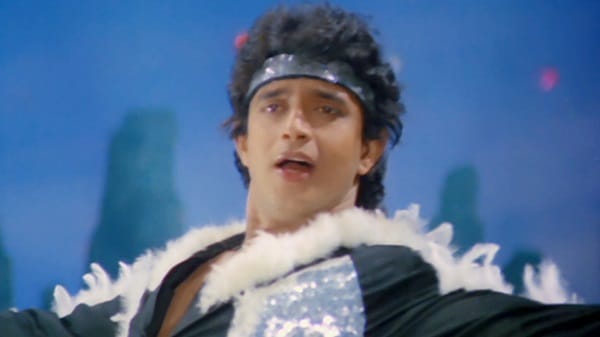
The film starred Mithun Chakraborty in the lead role, a performance that completely transformed his career. Playing Jimmy, a poor street performer who rises to fame as a disco star, Mithun struck an emotional chord with audiences. His journey felt personal, his struggles relatable and his dance style unforgettable. The supporting cast included Kim Yashpal, Om Puri and Rajesh Khanna, who appeared in a special role, adding further weight to the film.

The story follows Jimmy’s rise to stardom, which is soon overshadowed by heartbreak when his mother is ki*led by jealous rivals. This tragedy pushes him into a fight against corruption, envy and power struggles within the entertainment world. The film balances emotion, revenge and hope, all set to pulsating disco beats.
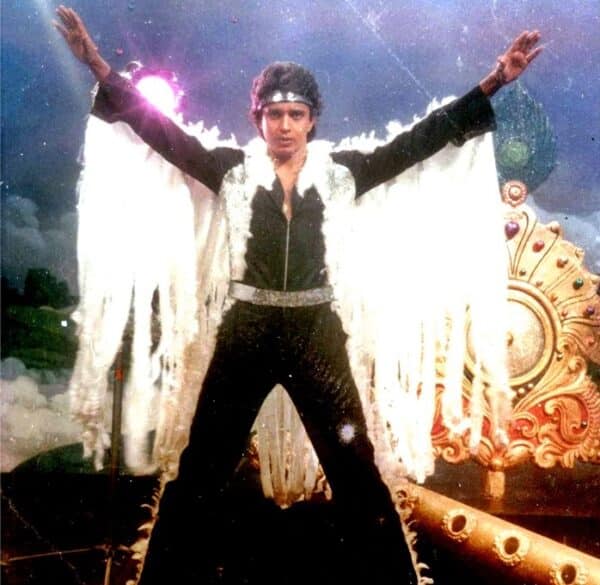
Bappi Lahiri’s soundtrack played a massive role in the success of the movie. Songs like “I Am a Disco Dancer” and “Jimmy Jimmy Aaja Aaja” became global hits, especially in the Soviet Union where they were played endlessly. Their infectious rhythm helped turn the film into a cult classic abroad.
More than four decades later, Disco Dancer is remembered as a game-changer. It proved that Indian cinema could achieve global box office success long before it became a trend and made Mithun Chakraborty a household name. It remains a shining example of how bold storytelling and universal emotion can make history.