

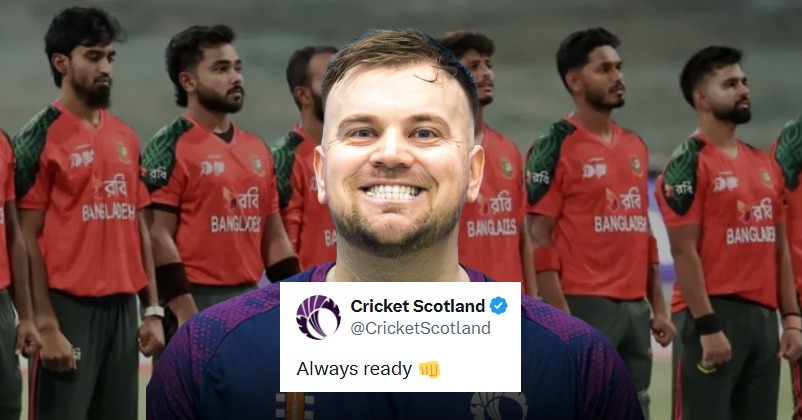
A quiet Saturday in Edinburgh quickly turned into one of the most dramatic moments in Scottish cricket history. Cricket Scotland’s headquarters suddenly sprang to life after an unexpected call from the International Cricket Council changed everything. Within hours, discussions intensified, plans were revisited and a decision of global significance was confirmed. Bangladesh, having failed to respond within the deadline set by the ICC, were officially removed from the ICC Men’s T20 World Cup 2026 and Scotland were invited to take their place.

The Scottish board wasted no time accepting the opportunity. With the ICC’s confirmation, Scotland were slotted straight into Group C, alongside heavyweight sides England and the West Indies, as well as Italy and Nepal. Soon after the announcement, the Cricket Scotland posted a confident message on social media that captured the mood of the moment. What had been weeks of uncertainty and political tension around the tournament finally ended but for Scotland, a completely new journey had just begun.

https://x.com/CricketScotland/status/2015115002202452304
Cricket Scotland CEO Trudy Lindblade revealed that the possibility of this invitation had been quietly discussed days earlier. After a board meeting last week, there was a sense that something unusual could unfold. Rather than waiting passively, the board chose to prepare for every possible outcome. Hypothetical plans were drawn up, timelines were discussed and contingency measures were considered, knowing how little time would be available if the call ever came.
When the official communication arrived from ICC representative Sanjog Gupta, the situation shifted from theory to reality. The challenge was immediate. With the tournament set to begin in India, Scotland potentially had their first match as early as February 2. That left barely two weeks to finalise a squad, secure visas, book flights, arrange accommodation and manage sponsorships. While squad selection was relatively straightforward, the real pressure came from logistics.

Scotland’s players were already deep into winter training. With temperatures dipping below freezing back home, most sessions had been held indoors. While that ensured fitness levels were maintained, the sudden switch to subcontinental conditions meant rapid adjustments were needed. Coaches, support staff and administrators worked around the clock to make sure the players would arrive prepared, both physically and mentally.
Despite the excitement, there was also empathy. Trudy Lindblade made it clear that Scotland never wished to qualify at the expense of another team. Bangladesh’s exit was not something to celebrate and the circumstances surrounding the invitation were far from ideal. She acknowledged that every team hopes to earn a World Cup place through the usual qualification route and this situation was unique and unfortunate.
Public reaction, as expected, has been mixed. Some questioned the fairness of the decision, while others debated Scotland’s sudden inclusion. The Scottish board, however, remains focused on what lies ahead. Ranked 14th in the world, Scotland see themselves as a competitive side that plays regularly and deserves the chance to test itself at the highest level. Regardless of how they arrived, the opportunity to play on cricket’s biggest stage is one they intend to make the most of.

The story becomes even more remarkable when looking back at Scotland’s recent past. Just last July, their World Cup hopes appeared to be over after a painful European qualifiers campaign. A loss to Italy dented their momentum and defeat against Jersey sealed their elimination. At that time, the idea of packing bags for India seemed unimaginable. Yet cricket, as it so often does, found a way to surprise.
Now placed in Group C, Scotland face a fascinating set of challenges. Matches against former champions England and the West Indies promise high-profile encounters, while Nepal arrive hungry and ambitious. Italy, the team that broke Scottish hearts in qualifiers, offers a chance for redemption.
Head of Performance Steve Snell believes last year’s disappointment played a crucial role in shaping the team’s mindset. According to him, the loss to Italy became a turning point that forced the squad to reassess fitness standards, mental toughness and attention to detail. That setback, rather than weakening the group, sparked growth and renewed hunger.
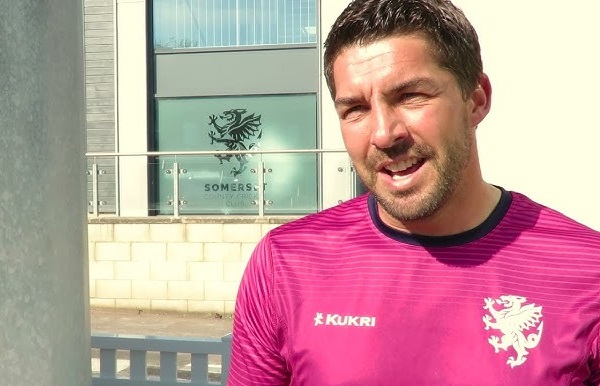


Steve Snell is particularly excited about the group fixtures. Facing England in Kolkata stands out as a special occasion, given the history and shared cricketing ties. While England’s depth and resources are well known, Scotland are not approaching the match with fear. Confidence in their own players and belief in competing hard remains central to their approach. Every game, in their eyes, is a chance to challenge expectations.
From indoor winter nets to World Cup floodlights, Scotland’s journey has taken an extraordinary turn. What started as a contingency plan has become a once-in-a-generation opportunity. The road ahead will be demanding but for Scottish cricket, this sudden invitation could mark the beginning of a defining chapter.