Key takeaways
- Gaganyaan G1, an uncrewed test with robot Vyommitra, is targeted within 2026 per ISRO’s chairman.
- India’s first crewed Gaganyaan flight follows two more uncrewed tests and has no firm date yet.
- The first Bharatiya Antariksh Station module is planned for 2028, with the full station by 2035.
- Chandrayaan-4 aims to return Moon samples around 2028; the Venus Orbiter targets March 2028.
- NISAR launched on 30 July 2025 and began public data releases in July 2026.
ISRO’s biggest upcoming missions are the uncrewed Gaganyaan G1 flight, targeted for the end of 2026, India’s first crewed Gaganyaan flight after that, the first Bharatiya Antariksh Station module by 2028, the Chandrayaan-4 Moon sample return mission around 2028 and the Venus Orbiter Mission in March 2028. NISAR, launched in July 2025, is already sending data.
Timelines in space programmes move often, so this article sticks to what ISRO, the Union government and NASA have said on record. Where a date has slipped or is not firm, we say so. All status details are as of 12 October 2026.
ISRO upcoming missions: timeline table (October 2026)
| Mission | What it is | Latest stated timeline | Status in October 2026 |
|---|---|---|---|
| Gaganyaan G1 | First uncrewed test flight of the Gaganyaan spacecraft, carrying the robot Vyommitra | Within calendar year 2026 (ISRO chairman, September 2026) | Crew module integration and parachute qualification tests done; launch date not yet announced |
| Gaganyaan G2 and G3 | Further uncrewed test flights | After G1, expected in 2027 | Planned |
| Gaganyaan H1 | India’s first crewed spaceflight on an Indian rocket | Earlier targeted for early 2027; no firm date yet | Depends on results of uncrewed flights |
| Bharatiya Antariksh Station (BAS-1) | First module of India’s own space station | 2028; full station by 2035 | Approved by the Union Cabinet in September 2024 |
| Chandrayaan-4 | Moon sample return mission | Around 2028 | Approved in September 2024 at Rs 2,104.06 crore; landing site studies under way |
| Venus Orbiter Mission | Orbiter to study Venus | March 2028 launch window | Approved in September 2024 at Rs 1,236 crore |
| NISAR | Joint NASA and ISRO Earth observation radar satellite | Launched 30 July 2025 | In science operations; public data releases began July 2026 |
1. Gaganyaan G1: the first uncrewed flight
Gaganyaan is India’s human spaceflight programme. Its main goal is to send a crew of three astronauts to an orbit of about 400 km for up to three days and bring them back safely, with splashdown in Indian waters. Before any astronaut flies, ISRO will fly uncrewed missions to test every system.
G1 is the first of these. It will carry Vyommitra, a half-humanoid robot that will report data from inside the crew module, such as conditions the astronauts would face. The spacecraft will be launched on a human-rated version of the LVM3 rocket from Sriharikota.
The date has moved several times. It was first planned for December 2020, and ISRO chairman V Narayanan said in October 2025 that G1 would fly in December 2025. That did not happen. In September 2026, Narayanan said the uncrewed mission was targeted within the 2026 calendar year, according to a PTI report. No exact launch date had been announced at the time of writing.
In 2026 so far, ISRO has completed key tests for G1. These include an integrated air drop test of the crew module in April 2026 and parachute qualification drops in July 2026. Reports in October 2026 also said integration of the crew module was complete.
Why it matters: A clean G1 flight is the gateway to every crewed mission that follows.
2. Gaganyaan G2, G3 and the first crewed flight
After G1, ISRO plans two more uncrewed flights, called G2 and G3, before it puts people on board. Each one is meant to build confidence in the crew escape system, life support, re-entry and recovery.
The first crewed mission, often called H1, has been pushed back more than once. In May 2025, Narayanan said the first crewed flight was targeted for the first quarter of 2027. Since G1 itself has slipped into late 2026, that target now depends on how quickly the uncrewed flights are completed. ISRO had not given a firm date for H1 as of October 2026.
Four Indian Air Force test pilots were named as astronaut-designates in February 2024: Group Captains Prasanth Balakrishnan Nair, Ajit Krishnan, Angad Pratap and Shubhanshu Shukla. Shukla flew to the International Space Station on the Axiom-4 mission in 2025, giving the programme direct experience of a long stay in orbit.
In September 2024, the Union Cabinet expanded the Gaganyaan programme to eight missions and raised its total funding to Rs 20,193 crore. The expanded scope includes the first station module.
3. Bharatiya Antariksh Station
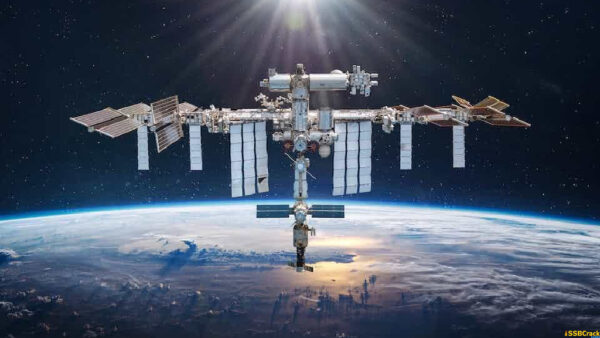
The Bharatiya Antariksh Station (BAS) is India’s planned space station. The Union Cabinet approved the first module, BAS-1, in September 2024 as part of the expanded Gaganyaan programme, with the missions under it to be completed by December 2028.
The government has said India aims to have its own operational space station by 2035 and to land an Indian on the Moon by 2040. BAS-1 is the first step. It will be used to test the systems needed to keep people in orbit for longer periods.
Why it matters: Only the former Soviet Union and Russia, the United States and China have run their own crewed space stations so far.
4. Chandrayaan-4: bringing Moon samples home
Chandrayaan-4 is ISRO’s planned lunar sample return mission. It aims to land near the Moon’s south pole, collect samples of lunar soil and rock, and bring them back to Earth. The Union Cabinet approved it on 18 September 2024 at a cost of Rs 2,104.06 crore.
The mission is more complex than Chandrayaan-3. It uses five modules that will be launched on two LVM3 rockets and joined in orbit, which is why ISRO’s SpaDeX docking experiment in late 2024 and early 2025 was so important. Former ISRO chairman S Somanath said in October 2024 that the agency aimed to fly the mission by 2028.
In 2026, ISRO studied candidate landing sites near Mons Mouton, a mountain close to the lunar south pole. A final launch date has not been announced.

Why it matters: Only the US, the former Soviet Union and China have brought Moon samples back to Earth.
5. Venus Orbiter Mission
The Venus Orbiter Mission, sometimes called Shukrayaan, will place a spacecraft in orbit around Venus to study its surface, its thick atmosphere and how the Sun affects the planet. The Union Cabinet approved it in September 2024 at a cost of Rs 1,236 crore.
The government has said the mission is planned for the launch opportunity in March 2028. Launch windows to Venus come only at certain times, so a missed window can mean a long wait.
Why it matters: It would be India’s first mission to Venus, after Mangalyaan to Mars in 2013.
6. NISAR: already in orbit
NISAR, the NASA and ISRO Synthetic Aperture Radar satellite, is not upcoming any more. It was launched on 30 July 2025 on ISRO’s GSLV-F16 rocket from Sriharikota. It carries two radars: an L-band radar from NASA and an S-band radar from ISRO.
The satellite images the same locations on land and ice every 12 days. This helps track earthquakes, landslides, glaciers, crop growth and flooding. NASA began the first public release of calibrated L-band data on 20 July 2026, and ISRO released S-band data products on 24 July 2026. NASA has said the full first-year science record should be available by the end of 2026.
Why it matters: Farmers, disaster agencies and researchers can download the data free of cost.
Other ISRO launches coming up
Alongside the flagship missions, ISRO has a busy launch list. In September 2026, Narayanan said ISRO was targeting six more launches in the current financial year, including the NVS-03 navigation satellite for the NavIC system.
- NVS-03: The next navigation satellite, to be launched on a GSLV rocket.
- Chandrayaan-5 (LUPEX): A joint lunar mission with Japan’s space agency JAXA. No launch date has been fixed.
- Next Generation Launch Vehicle (NGLV): A new, partly reusable heavy rocket approved in September 2024, meant for future station and Moon missions.
For background on how far India’s Moon programme has come, read our story on what NASA asked ISRO after Chandrayaan-3 and our round-up of the important events of 2023.
Frequently asked questions
When will Gaganyaan launch?
The uncrewed Gaganyaan G1 flight is targeted within 2026, according to ISRO chairman V Narayanan in September 2026. The first crewed flight will follow after more uncrewed tests.
What is ISRO’s next big mission?
Gaganyaan G1 is ISRO’s next big mission. It will test the crew spacecraft in orbit with the robot Vyommitra on board.
When will Chandrayaan-4 be launched?
ISRO has said it aims to fly Chandrayaan-4 by around 2028. It will be launched on two LVM3 rockets and will try to bring Moon samples back to Earth.
When will India have its own space station?
The first module, BAS-1, is planned for 2028, and the government aims to have the Bharatiya Antariksh Station operational by 2035.
Has NISAR been launched?
Yes. NISAR was launched on 30 July 2025 on a GSLV rocket and is now in science operations, with public data released from July 2026.
Sources: Telangana Today (PTI), September 2026; The Tribune, Cabinet approvals; ISRO, NISAR S-band data release; NASA Earthdata, NISAR L-band data.