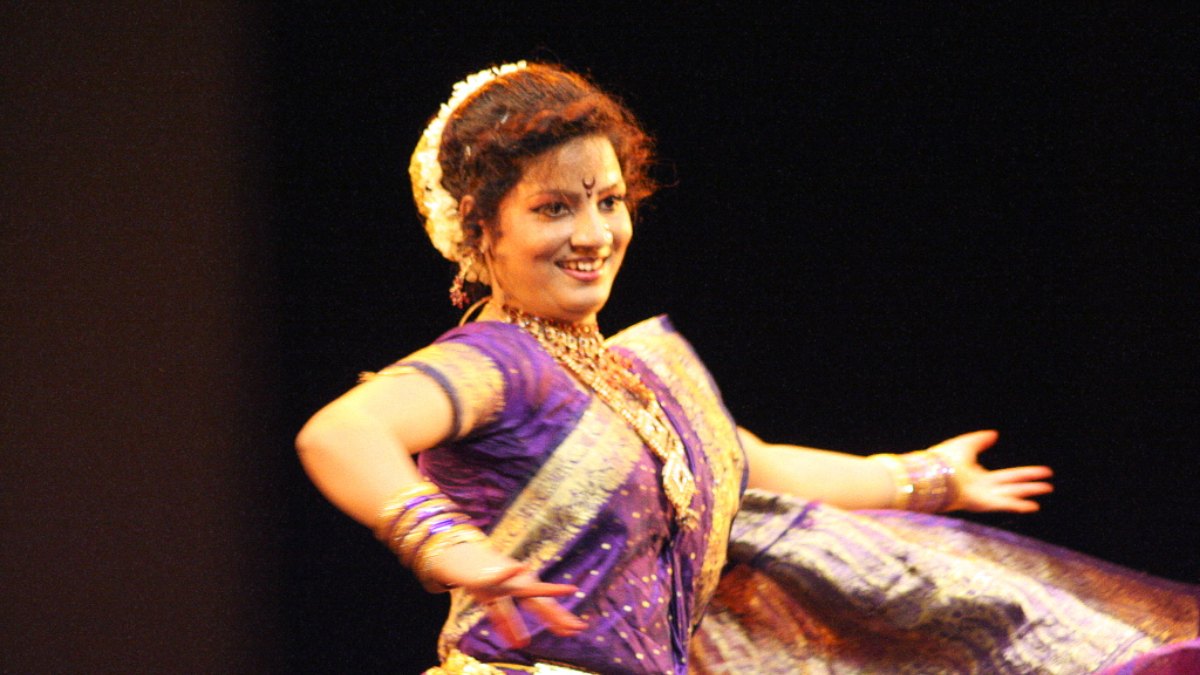
Vithabai Narayangaonkar (1935-2002) was a Tamasha and Lavani performer from Maharashtra, known to her fans as the “Tamasha Samradni” or Tamasha Empress. Her life is the basis of Eetha, the Laxman Utekar film starring Shraddha Kapoor that releases on 4 December 2026, which is why so many people are searching for her right now.
Here is the real story of Vithabai Narayangaonkar, from her childhood in a touring troupe to the award the Maharashtra government now gives in her name.
Vithabai Narayangaonkar at a glance
- Born: 1 July 1935, Pandharpur, Solapur district, Maharashtra
- Died: 15 January 2002, Narayangaon, Maharashtra
- Known for: Tamasha and Lavani performance
- Title: Tamasha Samradni (Tamasha Empress)
- Honours: Medals from the President of India in 1957 and 1990
- Legacy: Maharashtra’s Vithabai Narayangaonkar Lifetime Achievement Award, started in 2006
Born into a Tamasha family
Vithabai grew up surrounded by performers. Her grandfather Narayan Khude, from Kavathe Yamai in Pune district’s Shirur taluka, set up the family troupe. Her father Bhau Bapu Mang Narayangaonkar and her uncle later ran it as the Bhau-Bapu Mang Narayangaonkar troupe, as per her Wikipedia profile.
She was not much of a student. The stage was her classroom, and she picked up forms like Lavani, Gavlan and Bhedik as a child, performing in villages across Maharashtra without any formal training.
Tamasha and Lavani, in brief
To understand why Vithabai mattered, it helps to know the art form. Tamasha is a traditional Marathi folk theatre that mixes song, dance and comic skits, performed mostly by travelling troupes across Maharashtra. It took its distinct shape in the 18th century during the late Peshwa period, according to Wikipedia.
Lavani is the song and dance form most closely tied to Tamasha. Hindi cinema has borrowed Lavani-style songs for decades, but the artists who kept the form alive on village stages rarely got the same spotlight. Many traditional practitioners came from communities such as Kolhati, Mahar and Mang, and the form was often looked down upon by the urban middle class after Independence.
How Vithabai Narayangaonkar became the Tamasha Empress
A turning point came when Marathi playwright Mama Varerkar saw her perform and invited her to join his team. According to ThePrint, she learnt classical acting techniques such as Angik, Vachik and Satvik abhinaya through this work, even though she never went to drama school.
Her popularity grew to the point where audiences and the government alike called her Tamasha Samradni. She received medals from the President of India in 1957 and again in 1990, and her troupe also won the President’s award in the Tamasha genre.
The stories that made her a legend
Two episodes from her life come up every time her name is mentioned. Fans of the film will be watching to see how Eetha handles them.
Performing for soldiers at the border
During the India-China war, Vithabai performed a special Tamasha at the North-East Frontier Agency (NEFA) border for Indian troops, ThePrint reports. For a folk artist from rural Maharashtra, that was a rare stage.


Back on stage after giving birth
The most famous story goes like this: she was nine months pregnant and performing when she realised she was about to give birth. She went backstage, delivered the baby, cut the umbilical cord with a stone and went back out to continue. The audience, impressed but worried, stopped the show and asked her to rest. Sources do not record which year this happened.
A hard end to a famous life
Fame did not translate into financial security. In her later years, Vithabai faced money troubles and little support. When she died in 2002, her family reportedly could not pay the hospital bill, and donors stepped in to clear it.
That contrast between stage glory and personal struggle is a big part of why her story has drawn filmmakers. The Eetha teaser, released in June 2026, has Shraddha Kapoor saying in voiceover: “If I die lying in bed, I will be remembered as helpless, but if I die dancing, I will be remembered as a legend.”
Her legacy: family and the state award
Her daughter, Mangala Bansode, carried the family’s Tamasha tradition forward. In 2006, the Government of Maharashtra started the Vithabai Narayangaonkar Lifetime Achievement Award for senior Tamasha artists. It carries Rs 5 lakh, a citation and a memento, and Kantabai Satarkar was its first recipient. Mangala Bansode has also received it.
Vithabai Narayangaonkar on screen: Eetha
In Eetha, Shraddha Kapoor plays Eetha Bai, the film’s version of Vithabai. The cast includes Randeep Hooda, Nana Patekar, Mohd Zeeshan Ayyub and Anant Joshi, and Ajay-Atul have composed the music. Nana Patekar’s part in the film was among the projects in our roundup of Nana Patekar’s upcoming films.
The film is Shraddha’s first release after Stree 2, a gap she has explained in our story on why she turned down big offers after Stree 2. Eetha opens on 4 December 2026, the same day as Salman Khan’s Maatrubhumi.
Frequently asked questions
Who was Vithabai Narayangaonkar?
She was a Tamasha and Lavani performer from Maharashtra (1935-2002), known as the Tamasha Samradni or Tamasha Empress.
Is Eetha based on a true story?
Yes. Eetha is a biographical drama inspired by the life of Vithabai Narayangaonkar, with Shraddha Kapoor in the title role.
What awards did Vithabai Narayangaonkar win?
She received medals from the President of India in 1957 and 1990, and her troupe won the President’s award in the Tamasha genre.
Who was Vithabai Narayangaonkar’s daughter?
Her daughter is Mangala Bansode, also a Tamasha artist, who has received the Vithabai Narayangaonkar Lifetime Achievement Award.
When did Vithabai Narayangaonkar die?
She died on 15 January 2002 in Narayangaon, Maharashtra.