

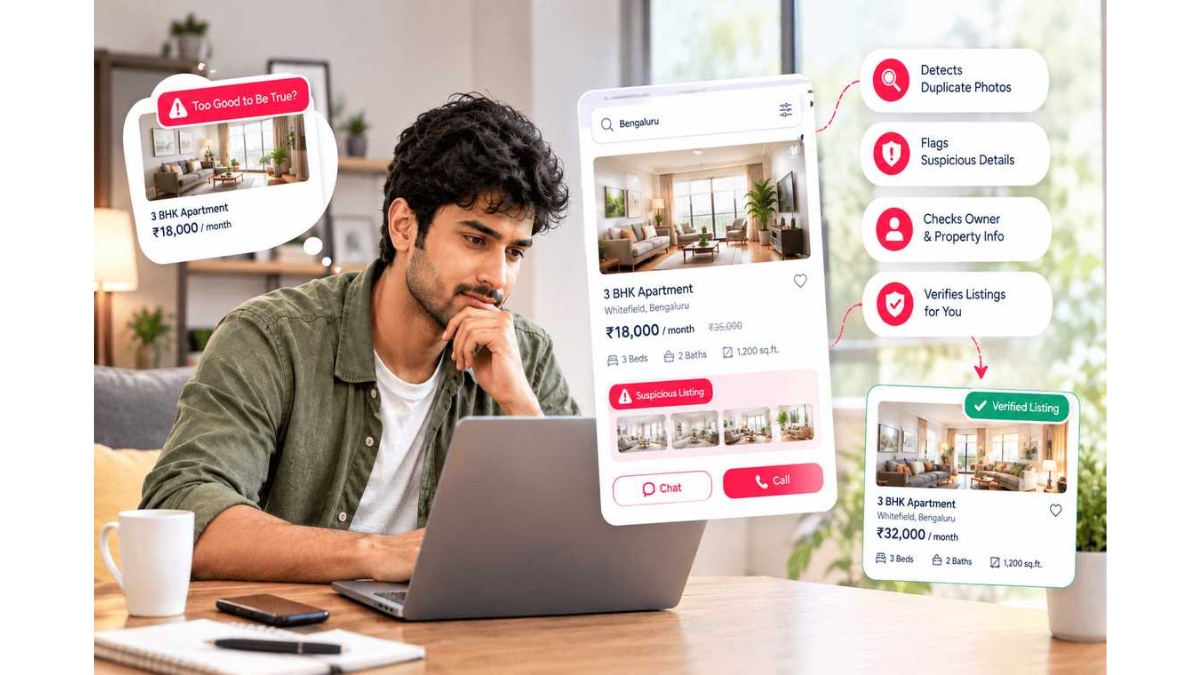
Finding a genuine property online isn’t always easy. Fake listings and misleading details are more common than most buyers realize, and it’s easy to waste hours chasing a flat that doesn’t actually exist as advertised, or has details that don’t add up once you dig in.
NoBroker tries to take some of that risk out of the process by connecting owners and property seekers directly, without brokers adding their own spin in between. Behind the scenes, NoBroker also checks listings for red flags like spotting duplicates, catching inconsistencies, and flagging details that look off , so buyers and renters have a clearer picture before they decide which properties are actually worth visiting.
What Counts as a Fake Property Listing?
Not every bad listing is intentionally fake. Some are just outdated – the flat got rented three weeks ago and nobody bothered to take it down. But a fair number are deliberately misleading, put up to:
- Pull in leads for a broker pretending to be an owner
- Advertise a price well below market rate to get clicks, then “discover” it’s no longer available once you call
- Use photos borrowed from a completely different property
- List a flat that was never actually available, just to collect phone numbers
Whatever the reason, the result is the same for you – wasted time and a bit less trust in the platform.


Common Signs of a Fake Property Listing
1. The Price Feels Too Good to Be True
If a 3BHK in a locality where everything else is priced at ₹35,000 a month is listed at ₹18,000, that’s not a lucky find – it’s bait. Genuine owners rarely price a flat 40-50% below the going rate in the same area.
2. The Same Photos Keep Showing Up
Same living room, three different addresses as it happens more than you’d think. If a listing’s photos look a little too polished, do a quick reverse image search. Real photos usually aren’t perfect because of bad lighting, an odd angle, maybe someone’s shadow in the frame because someone actually stood there and took them
3. The “Owner” Won’t Get on a Video Call
Ask for a quick video walkthrough before you commit to visiting in person, and a genuine owner will usually oblige, even if it’s a little inconvenient. Someone who keeps stalling, or insists you “just come see it,” is worth being cautious about.
4. There’s No Real Address, Just a Locality Name
Listings that only mention “near XYZ Metro Station” or “in Whitefield” without any building name or landmark are harder to verify. It’s not always a red flag on its own, but combined with anything else on this list, it adds up.
5. The Listing Has Been “Recently Posted” for Months
If a listing’s timestamp keeps refreshing to “posted today” every time you check, but the flat somehow never gets rented or sold, it’s likely being reposted to stay visible in search – a tactic real owners rarely bother with.
6. You’re Asked to Pay Before You’ve Even Seen the Place
Any request for a “booking amount” or “token” before an in-person or verified video visit is a serious warning sign. Legitimate transactions almost never require payment before you’ve actually seen what you’re paying for.
Why Detecting Fake Listings Is Difficult
A fake property listing can look genuine at first. The photos may seem real, the details may look right, and the price can be tempting. With so many properties being listed every day, checking each one carefully is a challenge. Scammers also change their approach from time to time. That’s why one check is rarely enough. Several details need to be looked at together to spot a suspicious listing.
Inside NoBroker’s Approach to Tackling Fake Listings
Keeping fake listings away is not a one-time job. NoBroker uses different checks and keeps an eye on listings to catch anything that looks unusual. Users can also report listings that seem suspicious, which helps bring attention to them.
- Listing verification: Basic details are checked to help identify genuine listings.
- Spotting unusual activity: Suspicious patterns in listings or user activity can be flagged for a closer look.
- User reports: Users can report listings if something doesn’t seem right.
- Restricting questionable listings: Listings that raise concerns may be reviewed, restricted, or removed.
- Regular monitoring: Listings and activity are monitored regularly as things change.
Technology’s Role in Identifying Suspicious Listings
Checking every property listing by hand isn’t practical when there are so many of them. Technology helps with the first level of checking. It can scan listing details, find things that don’t match, and flag them when something looks off. A person can then take a closer look when needed.
Automated Checks:
Some basic checks happen automatically when a listing is added or changed. This helps catch obvious issues early.
Duplicate or Fraud Patterns:
The same photos or property details appearing in different listings can be a warning sign. Technology can help find these similarities.
Data and Behavioural Patterns:
Changes to a listing can also be useful. For example, repeated edits or unusual activity may lead to a listing being checked more closely.
Human Review:
Not every flagged listing is necessarily fake. Sometimes there is a genuine reason behind the activity. That’s where human review matters – someone can look at the details and understand the situation before action is taken.
What Property Seekers Can Do to Protect Themselves
When using NoBroker, property seekers can take a few simple steps to protect themselves from fraudulent or misleading listings:
- Verify the owner and property – Check the owner’s details and property information carefully before proceeding.
- Don’t rush into advance payments – Avoid transferring money before verifying the property and understanding the terms of the transaction.
- Check photos and property details carefully – Look for inconsistencies, unrealistic prices, duplicate images, or incomplete information.
- Visit the property before making commitments – Whenever possible, physically inspect the property and confirm that it matches the listing.
- Report suspicious listings – If a listing, owner, or communication seems suspicious, report it through NoBroker’s available reporting/support channels.
Conclusion:
One verification check isn’t enough to keep fake listings out – not when property details keep changing and new listings show up every day. NoBroker has to treat this as something ongoing, not a box you tick once and forget.
Realistically, it takes a mix of things working together and technology that can catch unusual patterns, regular monitoring, and people flagging what doesn’t look right. Tech is good at spotting things at scale; users are often the ones who notice something’s off before any system does.
At the end of it, this all comes down to trust. The more NoBroker sharpens its checks, actually acts on what users report, and keeps listing details clear and current, the easier and safer it gets for people to search for a property without second-guessing everything they see.