


When the pressure was at its peak, India delivered a statement no one will forget. After a humbling loss to South Africa on February 26, the Men in Blue needed more than just a win, they needed dominance. And that’s exactly what they produced against Zimbabwe at the M. A. Chidambaram Stadium in Chepauk, Chennai, piling up a massive 256/4 in their T20 World Cup clash.

It wasn’t just a big total, it was historic. For the first time in the T20 World Cup history, six batters in a single innings scored over 20 runs at a strike rate above 150. Such a rare feat only happens when every batter understands their role and attacks with fearless intent.


Sanju Samson, drafted in place of Rinku Singh to strengthen the top order, set the tone early. He smashed 24 off 14 balls at a strike rate of 160, giving India immediate momentum.
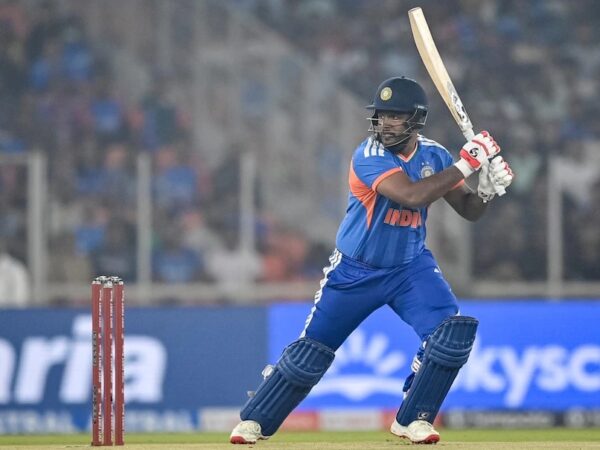
Abhishek Sharma rediscovered his rhythm with a sparkling 55 at a strike rate of 183.33, while Ishan Kishan adapted smoothly to his new No. 3 role, scoring 38 at 158.33. Even though both fell in quick succession, the aggression never dipped.
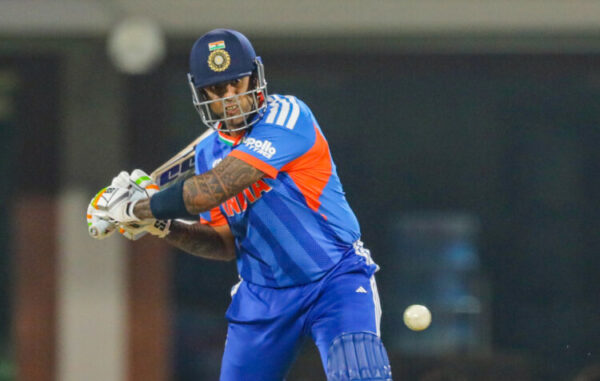
Captain Suryakumar Yadav lit up the stadium with a blistering 33 off just 13 balls. Then came the late fireworks – Hardik Pandya hammered 50 at a staggering strike rate of 217.39 and Tilak Varma added an explosive 44 at strike rate of 275 to push India past the 250-mark.
India’s dominance showed in the finer details too. They conceded just 26 dot balls, the joint fewest in a completed T20 World Cup innings. The only other instance was when South Africa recorded 26 dots against England at the Wankhede Stadium during the 2016 edition.
Chasing a huge target of 257 was always going to be tough for Zimbabwe. Though they fought hard, they could score only 184/6 in their stipulated 20 overs, handing India a commanding 72-run victory.
Next up – a virtual quarter-final against the West Indies on Sunday and the winner will finish second in the group. The winner of this virtual quarter final will face the Group 2 table-topper – either England or New Zealand.