

Bollywood singer Sona Mohapatra has once again drawn attention to an issue she believes deserves more discussion in the Indian music industry. This time, she has raised concerns about how romantic and heartbreak songs are distributed between male and female singers, arguing that women often receive less space and visibility in major Bollywood tracks.
In a recent video shared on Instagram, Sona Mohapatra spoke about a pattern she has noticed throughout her career. According to her, many Bollywood duets are designed in a way that gives male singers most of the important portions of the song, while female singers are left with much smaller parts.
Using her own experiences as an example, Sona Mohapatra explained that she has frequently been invited to sing duets where the majority of the song had already been assigned to the male vocalist. She pointed out that in several cases, the main sections of the composition are performed by the male singer, while the female voice appears only toward the end. She questioned whether such songs can truly be called duets when one singer carries almost the entire narrative.
One of the songs she referenced was Zaalima, the popular track from the 2017 film Raees. The song featured actors Shah Rukh Khan and Mahira Khan and was sung by Arijit Singh and Harshdeep Kaur. While discussing the song, Sona clarified that her comments were not aimed at individual artists. Instead, she suggested that the issue reflects a larger industry trend that has developed over time.
According to Sona Mohapatra, the problem is not about blaming singers, composers or any one person. Rather, she believes the music industry has become increasingly cautious and reluctant to experiment with different storytelling approaches. As a result, male voices continue to dominate many of the biggest romantic and emotional narratives in Bollywood music.
She expanded on these views in the comments section of the same Instagram post. There, she argued that the conversation is really about representation. In her opinion, if the industry stops creating strong and memorable stories from a female perspective, it may also struggle to produce female music stars who achieve the same level of cultural influence as their male counterparts.
Sona Mohapatra further suggested that over the past two decades, a large majority of Bollywood’s major romantic and heartbreak songs have been centered around male voices. She believes this imbalance has contributed to the gap between male and female stars in the music industry and deserves closer examination.

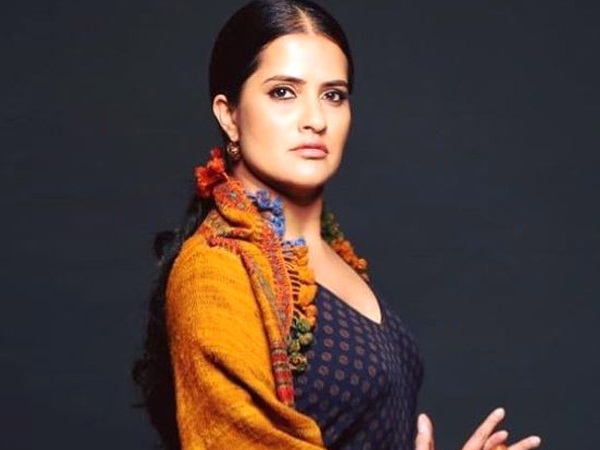
Known for her outspoken views, Sona Mohapatra has built a career that extends beyond playback singing. She is also a composer and an independent artist. Over the years, she has worked on remixes of international songs, including David Bowie’s Let’s Dance and INXS’s Afterglow, with the latter receiving significant appreciation from listeners.
Originally from Odisha, Sona Mohapatra studied Mechanical Engineering at the Odisha University of Technology and Research before earning an MBA in Marketing and Systems from Symbiosis Centre for Management and HRD in Pune. Today, she remains one of the most vocal voices in discussions about gender representation in India’s music industry.