Key takeaways
- Any citizen can hoist the Tiranga on any day, as long as its dignity and honour are kept.
- Since 2021, machine-made and polyester flags are allowed, and since July 2022 they can fly day and night.
- The flag must be rectangular with a 3:2 ratio, saffron on top, and never torn or dirty.
- A damaged flag must be destroyed as a whole, in private, preferably by burning.
- Insulting the flag can lead to up to three years in jail, a fine, or both.
The Flag Code of India, 2002 lets every citizen hoist the Tiranga on any day, as long as the flag is treated with respect. Since the 2021 and 2022 amendments, the flag can be machine-made or polyester, and a flag flown in the open or on a house can stay up day and night.
Most people only think about the flag code around 15 August and 26 January. But the rules apply all year, and a few small mistakes, like flying a torn flag or throwing paper flags on the road after a function, are exactly what the code asks you to avoid. Here is what the rules actually say, in simple terms.
What is the Flag Code of India, 2002?
The Flag Code of India is a set of instructions issued by the Ministry of Home Affairs (MHA) on how the national flag should be displayed, hoisted and handled. It came into effect on 26 January 2002 and brought together the earlier conventions and executive instructions into one document.
The code is divided into three parts. Part I describes the flag itself. Part II covers display by members of the public, private organisations and educational institutions. Part III covers display by the Central and State governments and their organisations and agencies.
The flag code works alongside a law: the Prevention of Insults to National Honour Act, 1971. The code tells you the right way to use the flag. The Act lists acts of disrespect that are punishable.
What changed in 2021 and 2022?
Two amendments made the flag code much easier for ordinary people to follow, especially during the Har Ghar Tiranga campaign.
- Material (30 December 2021): Earlier, only hand-spun and hand-woven khadi flags were allowed. The amended code permits flags that are hand-spun, hand-woven or machine-made, in cotton, polyester, wool, silk or khadi bunting.
- Day and night display (20 July 2022): Earlier, the flag was to be flown only from sunrise to sunset. The amended clause says that where the flag is displayed in the open or on the house of a member of the public, it may be flown day and night.
The rest of the code, including the rules on respect, damage and disposal, stays the same.
Indian flag size and ratio rules
The flag must be rectangular. It can be of any size, but the ratio of length to height (width) must always be 3:2. The code also lists nine standard sizes, which government offices and official cars use.
| Size No. | Dimensions (mm) | Common use |
|---|---|---|
| 1 | 6300 x 4200 | Not specified |
| 2 | 3600 x 2400 | Not specified |
| 3 | 2700 x 1800 | Not specified |
| 4 | 1800 x 1200 | Not specified |
| 5 | 1350 x 900 | Not specified |
| 6 | 900 x 600 | Not specified |
| 7 | 450 x 300 | Aircraft on VVIP flights |
| 8 | 225 x 150 | Motor cars |
| 9 | 150 x 100 | Table flags |
The code names specific uses only for sizes 7, 8 and 9. For a house, any size works as long as the 3:2 ratio holds and the flag is in good condition.
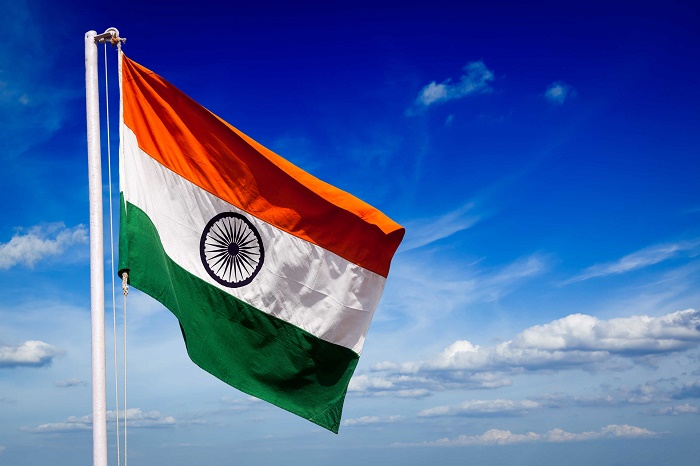
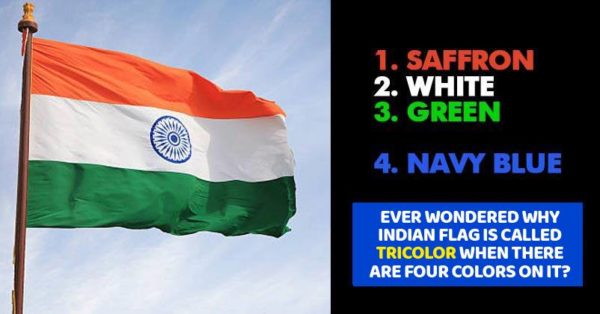
The flag has three equal horizontal bands: saffron at the top, white in the middle and green at the bottom. The Ashoka Chakra in navy blue sits at the centre of the white band and has 24 spokes. If you want to know why it is still called a tricolour despite four colours, read our explainer on the colours of the Tiranga.
How to hoist the national flag at home
Hoisting the flag at home or in your housing society is simple if you follow these steps.
- Check the flag first. It should be clean, not torn, not faded and not crumpled. The code says a damaged or dishevelled flag should not be displayed.
- Check the orientation. Saffron must be on top. Flying the flag upside down, with saffron at the bottom, is listed as an insult under the 1971 Act.
- Pick a spot of honour. The flag should occupy the position of honour and be clearly visible. No other flag or bunting should be placed higher than it or above it.
- Use its own pole or rope. The flag should not be flown from a single masthead together with any other flag.
- Hoist briskly, lower slowly. The code says the flag shall always be hoisted briskly and lowered slowly and ceremoniously.
- Keep it off the ground. Do not let the flag touch the ground or floor, or trail in water.
- Decide on timing. After the 2022 amendment, a flag on your house or in the open can stay up day and night. It is still good practice to take it down if it gets wet, dirty or torn.
If the flag is placed on a stage or platform for a speech, the code says it should be on a staff on the speaker’s right as the speaker faces the audience. When the flag is hung flat on a wall, saffron should be at the top.
Dos and don’ts of the Tiranga
Dos
- Display the flag on any day or occasion, as long as you keep its dignity and honour.
- Use a clean, undamaged flag in the 3:2 ratio.
- Keep saffron on top and give the flag the highest and most prominent place.
- Carry paper flags home after an event or dispose of them properly in private.
- Fold and store the flag neatly when it is not in use.
Don’ts
- Do not use the flag as a costume, uniform or accessory worn below the waist.
- Do not print or embroider it on cushions, handkerchiefs, napkins, undergarments or dress material.
- Do not write or print anything on the flag.
- Do not use it as drapery, a tablecloth, or to cover a statue, monument, speaker’s desk or building.
- Do not drape it over a car, train, boat or aircraft.
- Do not use it to carry or deliver things. Flower petals placed inside before unfurling on occasions like Republic Day and Independence Day are an exception.
- Do not dip the flag in salute to any person or thing.
- Do not fly it at half-mast on your own. Half-masting happens only on occasions instructed by the Government.
Most of these don’ts are written into Explanation 4 of Section 2 of the Prevention of Insults to National Honour Act, 1971, so they are not just etiquette.
Who can fly the flag on a car?
Ordinary citizens cannot fly the national flag on their cars. The code limits this privilege to a fixed list of dignitaries. These include the President, Vice-President, Governors and Lieutenant Governors, the Prime Minister and other Union and State ministers, presiding officers of Parliament and state legislatures, and judges of the Supreme Court and High Courts, among others.
Wrapping or covering the side, back or top of a vehicle with the flag is also treated as disrespect.


Half-mast rules in brief
Half-mast means lowering the flag to halfway between the top of the pole and the guy-line. When flown at half-mast, the flag is first hoisted to the peak for an instant and then lowered. Before it is taken down for the day, it is raised to the peak again.
Only the Government decides when the flag flies at half-mast, for example on the death of certain dignitaries or during State mourning. The flag is also used to drape the body at State, military and central paramilitary funerals, which you can read about in our piece on who gets a state honour.
How to fold the national flag
The Flag Code does not give a detailed folding drill, but during Har Ghar Tiranga in 2022 the Ministry of Culture’s Azadi Ka Amrit Mahotsav handle shared a simple method that is now widely followed.
- Hold the flag flat and horizontal.
- Fold the saffron band and the green band under the white band.
- Fold so that only the white band with the Ashoka Chakra is visible on top, with the saffron and green tucked beneath.
- Carry the folded flag on your palms or arms and store it in a clean, dry place.
Avoid stuffing it in a drawer with other items or keeping it where it can get damp, stained or stepped on.
How to dispose of a damaged Tiranga
Flags fade and tear over time, especially polyester flags left outside through the monsoon. The code has clear rules for this.
- Damaged or soiled cloth flags: Destroy the flag as a whole, in private, preferably by burning, or by any other method that respects its dignity.
- Paper flags: Do not throw them on the ground after an event. Discard them in private, keeping the dignity of the flag in mind.
- Do not cut it up: “As a whole” means you should not tear or cut the flag into pieces before disposing of it.
- Do not dump it with garbage: Putting the flag in a dustbin or on a road is exactly the kind of disrespectful disposal the code rules out.
After big events, many schools, municipal bodies and NGOs collect used paper and plastic flags so they can be disposed of properly. MHA advisories have also asked people to avoid plastic flags, since they are hard to dispose of with dignity.
What is the punishment for insulting the flag?
Under Section 2 of the Prevention of Insults to National Honour Act, 1971, anyone who burns, mutilates, defaces, destroys, tramples upon or otherwise shows disrespect to the national flag in a public place or in public view can be punished with imprisonment of up to three years, a fine, or both.
Section 3A adds a minimum of one year of imprisonment for a second or later offence. The definition of the flag in the Act also includes any picture, painting, drawing or photograph of it, so a printed image used disrespectfully is covered too.
Fair criticism is allowed. The Act clearly says that commenting on or criticising the flag, with the aim of changing it through lawful means, is not an offence. Personal choices, like why MS Dhoni does not wear the flag on his helmet, often come from respect for these very rules.
Frequently asked questions
Can I fly the Indian flag at night at my home?
Yes. Since the amendment of 20 July 2022, a flag displayed in the open or on the house of a member of the public may be flown day and night.
Is a polyester Indian flag allowed?
Yes. The amendment of 30 December 2021 permits hand-spun, hand-woven or machine-made flags in cotton, polyester, wool, silk or khadi bunting.
Can I print the Tiranga on a T-shirt?
The 1971 Act bars printing or embroidering the flag on dress material, cushions, napkins and undergarments, and using it as clothing below the waist. It is safest to avoid it on clothing.
What should I do with an old or torn flag?
Do not display it. Destroy it as a whole, in private, preferably by burning, or in another dignified way. Do not cut it or throw it in the bin.
What is the ratio of the Indian national flag?
The length to height ratio is 3:2. The flag can be of any size as long as this ratio is kept.
Sources: Flag Code of India, 2002 (MHA), PIB note on the national flag (July 2022), Prevention of Insults to National Honour Act, 1971 text, Business Standard on the 2022 amendment.